When people talk about the rise of Israel’s technology sector, they often focus on the headlines: unicorns, global acquisitions, and world-class cybersecurity companies. But behind those successes lies something less visible: decades of ecosystem building, experimentation, and a mindset that encourages entrepreneurs to think far beyond the limits of a small domestic market.
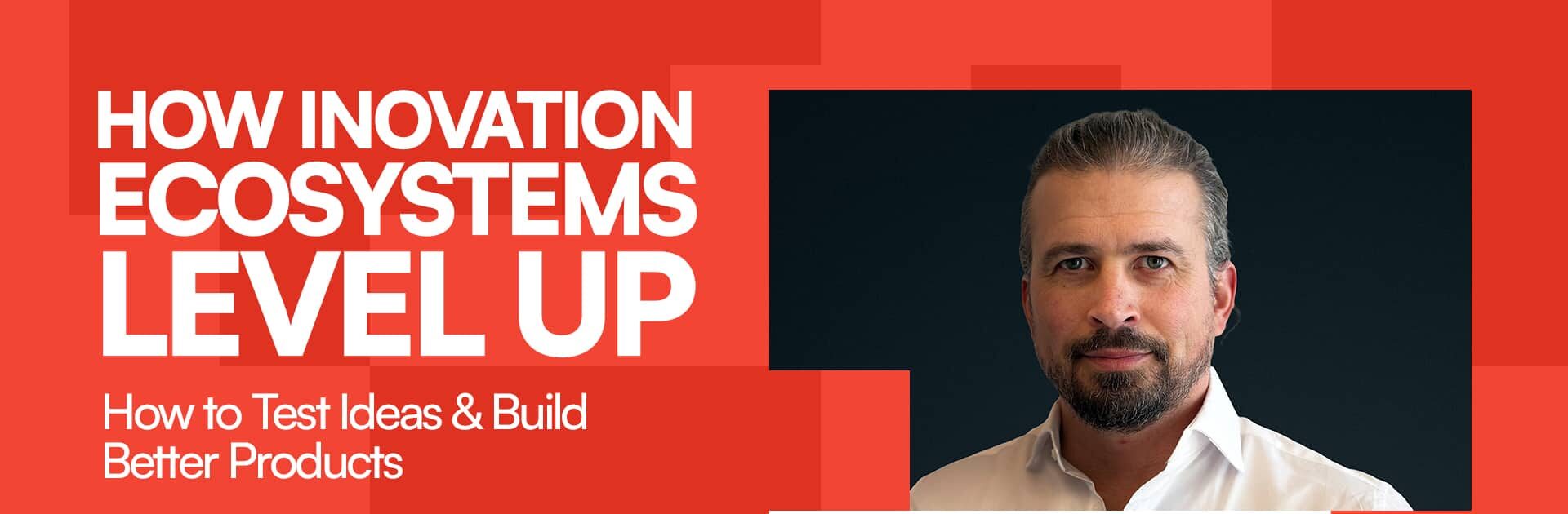
Our guest, Uri Adoni has spent much of his career inside that process. As a venture investor, ecosystem builder, and former CEO of MSN Israel, he has worked closely with startups, investors, universities, and government initiatives that helped shape Israel’s innovation landscape. Today, he shares those lessons globally through his work with startups and through his book The Unstoppable Startup: Mastering Israel’s Secret Rules of Chutzpah.
Adoni visited Belgrade as a keynote speaker at the launch of Hub201, a our initiative aimed at strengthening Serbia’s cybersecurity and innovation ecosystem. In a conversation following his keynote, we spoke with him about what smaller countries can learn from Israel’s journey, how entrepreneurial ecosystems actually take shape, and what founders in Serbia should understand if they want to build companies that compete on a global stage.
Note: The interview has been edited for clarity, length, and narrative flow. The written version may therefore differ slightly from the original video conversation.
Small countries, big outcomes
Hub201: Israel has shown that it can produce cybersecurity companies that attract global investment, including recent acquisitions by players like Palo Alto Networks and CrowdStrike. What are the key conditions that make this possible, and how can Serbia start building them?
Uri Adoni: The main condition starts with an ecosystem. You can build great technology in labs, but you can only build great companies with an ecosystem. An ecosystem should have various stakeholders, including entrepreneurs and talent, but you also need capital, academia, government support, multinationals, and an entrepreneurial culture.
When you have all that, you have fertile ground to grow great companies.
Chutzpah vs local mindset
Hub201: In Israel, chutzpah is often cited as a driver of startup culture. In Serbia, we talk about inat: our authentic sense of persistence and resistance. Can this mindset be turned into a productive force for innovation, and what must change for it to scale beyond individuals?
Uri Adoni: If I understand the term, it means that when you face a challenge or difficulty, you can overcome it, that you are resilient. That is very important for any startup, because every startup faces challenges. Chutzpah comes from the other direction. It is mainly a mindset that allows you to think in an audacious way, without crossing the thin line between audacious and arrogant.
It allows you to say: “We will build a company that will be a leader in the category”, or “we will invent a new category”, or “we will compete with the largest multinationals”. This mindset enables you to think globally and compete strongly. On top of that, you need resilience because you will face challenges. The combination of the two is probably the best formula.
The Long Road to Cybersecurity Leadership
Hub201: Looking at Israel today, it’s easy to focus on the latest successes. But the ecosystem was shaped by many years of trial, error, and reinvention. What is the most misunderstood part of Israel’s cybersecurity journey, and how can Serbia avoid copying the surface without building the foundations?
Uri Adoni: In the late nineties and early 2000s, many companies started from the technology. They had a technology, built a company around it, and then looked for a market. That is not the right way to do it. Sometimes you find a market, but sometimes you don’t, and the company has technology but nothing to do with it. The lesson is to start with the market, start with the pain and the problem, and then engineer the solution to meet those challenges.
These challenges should not only be today’s challenges. You need to forecast what the challenges will be in three, four, or five years, especially now in the AI era. You build a company around that hypothesis. Sometimes the hypothesis is right, sometimes it is not, but if it makes sense you can forecast it and adjust along the way.
Understanding the market pain before developing the technology is something we learned over time. In the early days we started with the technology, and we should have started the other way around.
Why Some Startups Become Categories While Others Remain Tools?
Hub201: As a partner at JVP Media Labs, you observed startups from early to late stages. What characteristics distinguish the teams that have a real chance of becoming category leaders, rather than just “another tool”?
Uri Adoni: It’s the mindset, to start with. You want entrepreneurs who look at the world within the space they operate in, not just the local economy or local problems, and who try to tackle challenges that will come in two or three years.
The second element is the level of technology they build. If you develop software in three months it is relatively easy to copy. But if you build deep technology, sometimes based on university research that took five, eight, or ten years, you create strong IP. The combination of strong technology, real market need, and a strong team is what you want to see. Successful companies all had that.
There is one more thing: a sense of urgency. You need to run fast and accelerate because it is a very dynamic world and many entrepreneurs are working on similar ideas. To become a category leader, you must be among the first.
What is validation in this day and age?
Hub201: From a VC perspective, what does “good enough validation” mean today? Which metrics or signals do you look for most closely?
Uri Adoni: Validation changes with the stage of a startup. A pre-seed or seed company needs different validation than a Series A or B company. The common denominator is market need and some form of market validation. In the past investors often focused on the technology. But most companies that fail do not fail because the technology does not work.
The technology usually works. What fails is product-market fit, go-to-market strategy, pricing, distribution, or strategic partnerships. Even at the seed stage you want some validation from the market, whether through strategic partners, early users, or use cases. In later stages you want traction: clients, recurring clients, and scalability. If I had to choose one word, it would be the market. That is what we look for in due diligence.
Key message to young Serbian entrepreneurs in Cybersecurity
Hub201: What is the single most important lesson young Serbian entrepreneurs in cybersecurity should internalize as they start building companies?
Uri Adoni: Listen to the market, both before you start a company and after. You should constantly adapt to market needs and pains instead of saying, “This is what I am building and I don’t care what others say.”
Understanding the market is crucial. At the same time, you must move fast. If you need to change direction, change it quickly. Time is of the essence.
Stay focused. Many startups try to do too many things at once: another feature, another this, another that. Keep your eye on the ball. The only reason to change direction should be the market.
And be passionate about what you are building. If you do not love the problem you are solving, you probably will not survive the challenges that come with building a company.